E012. In Search of Lost Time II: The Cartographer of Power
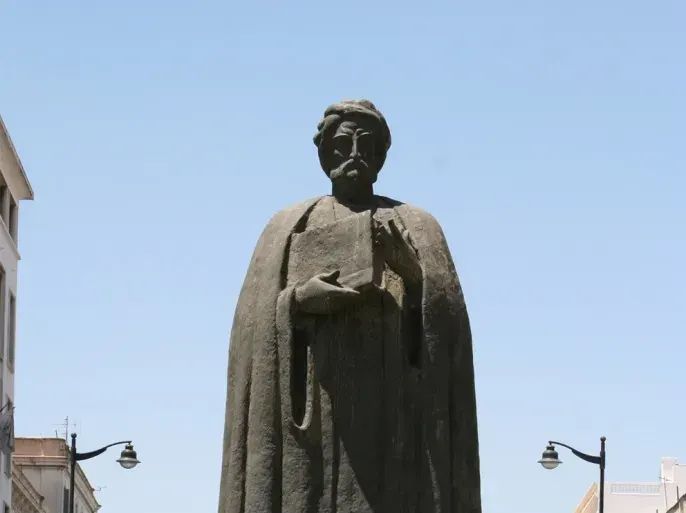
Ibn Khaldun, Asabiyya, and the Geopolitical Transition
A Note Before Beginning
The first volume of this series argued that Pitirim Sorokin was suppressed by a specific institutional mechanism: Cold War epistemology rerouting resources away from civilizational critique and toward quantifiable, policy-relevant social science. The suppression was active, datable, and traceable to identifiable actors and funding structures.
The suppression of Ibn Khaldun is older, deeper, and more structurally embedded. It does not have a single institutional origin. It is not the product of a particular historical conjuncture, though particular conjunctures have reinforced it. It is the product of a foundational assumption so thoroughly internalized by Western social science that it rarely requires explicit articulation: the assumption that systematic theoretical knowledge about human social organization began in Europe, in the eighteenth and nineteenth centuries, with Vico, Montesquieu, Saint-Simon, and Comte.
This assumption is not defended. It is not argued for. It is enacted — in syllabi, in intellectual genealogies, in the canonical figures invoked to authorize theoretical claims, in the geography of the citations that anchor the literature in every major social science journal.
Ibn Khaldun wrote the Muqaddimah in 1377. Comte published the first volume of his Cours de Philosophie Positive in 1830. The gap is four hundred and fifty-three years. In those four hundred and fifty-three years, one of the most systematic and empirically grounded theories of social organization, political power, and civilizational dynamics ever produced sat at the margins of Western social science — occasionally acknowledged, never integrated, treated as an interesting predecessor rather than a theoretical resource.
Power disguised Ibn Khaldun as ethnographic curiosity.
What follows is the act of recovery.
I. The Man and the Method: A New Science of Civilization
Abu Zayd Abd al-Rahman ibn Muhammad ibn Khaldun al-Hadrami was born in Tunis in 1332, into an Andalusian Arab family that had fled the Reconquista and resettled in North Africa. He died in Cairo in 1406, having lived one of the most turbulent and politically exposed intellectual lives of the medieval world. He served multiple sultans in multiple courts across the Maghreb and Andalusia, was imprisoned, exiled, appointed to positions of high authority, stripped of them, and restored. He negotiated with Timur — Tamerlane — outside the walls of Damascus in 1401, one of the great meetings of minds across civilizational boundaries in history. He understood power from the inside, from the outside, and from the catastrophic edge between them.
The Muqaddimah — literally "Introduction," written as the prolegomena to his vast historical work Kitab al-Ibar (Book of Lessons) — was composed in isolation in the castle of Ibn Salama in western Algeria between 1375 and 1377. It is the product of a man who had watched dynasties rise and fall, who had served rulers who would be destroyed within decades, who had survived conditions that should have destroyed him, and who brought to the analysis of these experiences a methodological discipline that was, for its time, without parallel.
What Ibn Khaldun invented — and it is not too strong a word — was a systematic science of social organization. He called it 'ilm al-'umran al-bashari: the science of human civilization. Its premises are worth stating precisely, because they are what make it theoretically powerful.
First: human social organization follows regular patterns that can be identified through careful observation and analysis. History is not chaos. It is not the product of individual genius or divine intervention alone. It is shaped by structural forces that recur across times and places.
Second: the primary analytical task is to identify those structural forces, not to narrate events. The events of history are symptoms. The structural forces are causes. A historian who does not ask about structural forces is, in Ibn Khaldun's formulation, merely a collector of stories — entertaining, possibly accurate at the surface level, but incapable of understanding or predicting anything.
Third: the most important structural force in human social organization is what he called asabiyya — a concept so central to his entire framework that it requires extended treatment.
II. Asabiyya: The Force That Builds and Destroys Civilizations
Asabiyya is routinely translated as "group feeling," "tribal solidarity," or "social cohesion." These translations are accurate but insufficient. They capture what asabiyya is without conveying what it does, and it is what it does that gives the concept its theoretical power.
Asabiyya is the quality of collective cohesion that enables a group to act as a unit — to coordinate, to sacrifice for shared goals, to maintain loyalty under pressure, to project power outward. It is not merely sentiment. It is sentiment organized into effective collective capacity. A group with strong asabiyya can do things that a group of equivalent individual capability but weak asabiyya cannot. It can fight. It can build. It can sustain institutions across generations. It can, under the right conditions, conquer.
Asabiyya is produced, Ibn Khaldun argues, by conditions of hardship, proximity, and necessity. Groups that live in harsh environments — desert, steppe, mountain — where survival requires coordination and where luxury is structurally unavailable, develop asabiyya naturally and powerfully. Groups that live in conditions of settled affluence — urban, sedentary, dependent on complex institutional arrangements rather than direct personal solidarity — tend toward the erosion of asabiyya. The city produces sophistication, specialization, cultural refinement, and material abundance. It also, over time, produces the attenuation of the direct personal bonds, shared sacrifice, and collective discipline that asabiyya requires.
This is Ibn Khaldun's foundational insight, and it is worth pausing to note how structurally similar it is to Sorokin's account of Sensate culture's self-undermining dynamic, Polanyi's account of how market expansion dissolves the social fabric, and Durkheim's account of anomie as the pathological product of advanced organic solidarity. Ibn Khaldun reached a structurally equivalent conclusion through a different empirical base and a different analytical vocabulary, four to six centuries earlier. The convergence is not coincidental. It is evidence that all four thinkers were identifying something real about the dynamics of complex social organization.
The Dynastic Cycle
The Muqaddimah's most famous contribution is the theory of the dynastic cycle, which follows directly from the asabiyya analysis.
The cycle unfolds in three to four generations. In the first generation, a group with powerful asabiyya — typically from the periphery of an existing civilization, hardened by austere conditions — achieves political power. The founders retain their original virtues: physical endurance, mutual loyalty, willingness to sacrifice, discipline. They build the state.
The second generation grew up knowing both the struggles of the founding period and the comforts of achieved power. They remember, or have been told, where they came from. They can maintain the institutional structures their parents built, though they begin to lose the direct experiential grounding of asabiyya.
The third generation knows only the palace. They have grown up in luxury, surrounded by ceremony and comfort, insulated from the conditions that produced asabiyya in the first place. They trust in their inherited position rather than in earned collective capacity. They replace loyal asabiyya-bound companions with servants and mercenaries. They spend lavishly on court culture, on luxury goods, on the performance of power rather than its substance.
By the fourth generation, asabiyya is effectively gone. The dynasty is a hollow shell maintained by habit, ceremony, and coercion. At this point, a new group from the periphery — itself possessed of strong, unspoiled asabiyya — is able to challenge and eventually displace it. The cycle begins again.
Ibn Khaldun gave this cycle an approximate duration of three to four generations, or roughly one hundred to one hundred and twenty years. He was careful to note this as a tendency rather than a law — specific circumstances can accelerate or retard the cycle — but he regarded the basic dynamic as close to universal among the forms of political organization he had observed.
Religion as Asabiyya Multiplier
One dimension of Ibn Khaldun's theory that is frequently underemphasized is his analysis of religion's relationship to asabiyya. Religion, he argues, does not replace asabiyya. A purely religious movement without asabiyya cannot achieve political power. But religion can dramatically amplify asabiyya by providing it with transcendent legitimation — extending solidarity beyond the immediate kinship or tribal group, suppressing internal conflicts in the service of shared divine purpose, and motivating sacrifice on a scale that purely worldly solidarity cannot sustain.
The great Muslim conquests of the seventh century are his paradigm case: the early Islamic community combined powerful asabiyya among the Arabian tribal confederacy with the extraordinary cohesive and motivating force of religious conviction. The result was a military and political achievement of a scale that neither factor alone could have produced.
This analysis is not merely historical. It is a general theory about the conditions under which normative frameworks — religious, ideological, nationalist — can transform the political capacity of social groups. It is also a theory about the conditions under which such transformations fail: when religious or ideological invocation attempts to substitute for asabiyya rather than amplify it, the result is not enhanced collective capacity but legitimizing rhetoric for a hollow political structure.
III. The Epistemological Revolution: History as Social Science
To recover Ibn Khaldun solely as a theorist of political cycles would be to miss half of what he accomplished. The Muqaddimah begins not with the asabiyya theory but with an extended methodological prolegomena — a systematic account of why existing historical writing is unreliable and what a properly scientific approach to historical knowledge would look like.
Ibn Khaldun's critique of historical narrative is devastating in its precision. Historians, he argues, routinely err in seven characteristic ways: partisan bias, excessive credulity toward sources, failure to understand the purposes of those who report events, unfounded assumption that the present resembles the past, ignorance of the structural conditions that make events possible, excessive desire to please powerful patrons, and — most fundamentally — failure to understand the science of human civilization itself, without which historical events cannot be properly assessed.
This last error is the most important. An event reported in historical sources must be evaluated not only against the reliability of the source but against the structural plausibility of the event itself. If a source reports a military force of a million men, we must ask: can the logistical infrastructure of the relevant civilization have supported such a force? If not, the report is implausible regardless of the source's apparent reliability. If a source reports a dynasty maintaining its character across ten generations, we must ask: is this consistent with what we know about the structural dynamics of political power? If not, we should look for a different explanation.
This is, in its basic structure, hypothetico-deductive reasoning applied to historical evidence — the scientific method avant la lettre, developed four centuries before Bacon and five before the institutionalization of the scientific community in European universities.
The epistemological claim is stronger than it might initially appear. Ibn Khaldun is not merely saying that historians should be careful about their sources. He is saying that historical knowledge requires a prior general theory of social organization — what he calls the science of human civilization — without which the evaluation of historical evidence is impossible. The theory comes first. The evidence is assessed against the theory. And the theory itself is validated or revised through its capacity to make sense of historical evidence.
This is, in its logical structure, exactly what contemporary social scientists claim to be doing — and it predates the philosophical frameworks within which they make that claim by several centuries.
IV. The Suppression: Orientalism as Epistemological Structure
Why is Ibn Khaldun not in the canon?
The question is genuinely puzzling if posed in purely intellectual terms. Arnold Toynbee, not given to hyperbole, called the Muqaddimah "undoubtedly the greatest work of its kind that has ever yet been created by any mind in any time or place." Franz Rosenthal, whose three-volume English translation appeared in 1958, regarded it as among the most important texts in world intellectual history. Individual scholars across multiple disciplines have acknowledged its significance.
Yet it does not appear in the founding narratives of sociology, political science, or economics. It is not read in the introductory courses of those disciplines. It is not cited in the theoretical frameworks that structure contemporary social science research. When it appears in syllabi at all, it appears in area studies courses — courses on Islamic civilization, on the medieval Maghreb, on North African history — not in courses on social theory.
This placement is the act of suppression. And it works precisely because it looks like appropriate classification rather than exclusion.
Edward Said's Orientalism provides the necessary analytical framework. The Orientalist structure of Western knowledge production constitutively divides the world into two domains: the West, which is the subject and producer of universal theory, and the rest, which is the object of that theory and the source of particular, localized, ethnographic data. A European thinker who develops a general theory of social organization is a theorist. A non-European thinker who develops an equivalent general theory is an ethnographer of his own civilization — producing not universal theory but particular cultural expression, interesting as evidence of how people in that civilization understood their world, but not generating concepts that can be used to analyze other civilizations or the present.
This is not a policy. It is a structure. No committee decided to classify Ibn Khaldun as ethnography rather than theory. The classification happened automatically, as the natural expression of the Orientalist epistemological framework that Western social science had internalized so completely that its assumptions felt like common sense.
The consequences are specific and traceable. Social science does not have the concept of asabiyya in its standard toolkit. It therefore cannot name what asabiyya names — and the phenomena that asabiyya names are among the most important in the contemporary world.
V. Reading the Present: Asabiyya and the Geopolitical Transition
The claim that follows is not metaphorical. It is not an extended analogy of the kind that makes bad application of theory to history. Ibn Khaldun's framework, applied to the present geopolitical conjuncture without apology or qualification, produces analyses of the major structural dynamics of the early twenty-first century that are more precise, more predictive, and more explanatorily powerful than the dominant frameworks of contemporary International Relations theory.
The American Dynastic Cycle
The United States, measured against Ibn Khaldun's cycle, presents a remarkably clear case.
The founding generation — the revolutionary cohort, the constitutional framers — exhibited classic asabiyya characteristics: shared sacrifice, austere personal lives, direct experience of collective struggle, genuine ideological commitment combined with practical political competence. The institutional structures they built reflected this combination.
The pattern of subsequent generations is equally readable. American asabiyya — the binding solidarity that enabled institutional trust, willingness to pay taxes, deference to common institutions, restraint of factional interest in service of collective goods — was at its most powerful in the period of the World Wars and the immediate postwar decades. The shared sacrifice of the Depression and World War II, combined with the genuine existential threat of the Cold War, maintained a level of social cohesion that sustained the institutional architecture of the New Deal order.
From the 1970s onward, the pattern of asabiyya erosion becomes unmistakable. The willingness to sacrifice for collective goods — to pay taxes, to accept restrictions on individual accumulation, to regard institutional legitimacy as something worth preserving — has declined in almost every measurable dimension. The replacement of citizen-soldiers by professional and increasingly mercenary military forces. The capture of public institutions by private interests. The transformation of politics from deliberation into spectacle. The collapse of any shared epistemic foundation capable of sustaining collective reality-assessment.
None of this is adequately explained by the frameworks of American political science — polarization theory, rational choice models of institutional failure, economic theories of elite capture. These frameworks describe the mechanisms of decline. Ibn Khaldun names what is declining: asabiyya. The binding solidarity without which institutions are hollow, democracy is performance, and military power rests on hired force rather than genuine collective will.
The implications are precise and uncomfortable. Ibn Khaldun did not believe that asabiyya, once lost, could be recovered by institutional reform or policy adjustment. The conditions that produce asabiyya — shared hardship, direct mutual dependency, the genuine experience of collective struggle — cannot be manufactured by legislation. A civilization that has allowed its asabiyya to atrophy to a critical threshold faces a structural problem that lies below the level at which its own political processes can reach.
This does not mean that American decline is inevitable in the short term, or that specific catastrophe is imminent. Ibn Khaldun was describing tendencies, not laws. But it does mean that the dominant framework for analyzing American political dysfunction — as a problem of institutional design, elite behavior, or media environment — systematically misidentifies the level at which the primary pathology is operating.
China and the Asabiyya of the Periphery
If the United States presents a case of asabiyya erosion at the center, China presents a case of asabiyya consolidation at what was, within living memory, the periphery of the US-led international order.
The Chinese Communist Party's legitimacy narrative is, in its deep structure, an asabiyya narrative: the story of a people who survived humiliation, poverty, and fragmentation through collective discipline and shared sacrifice, and whose collective identity was forged in the fires of that experience. The Century of Humiliation — the period from the First Opium War to the founding of the People's Republic — functions in Chinese political culture precisely as the founding struggle functions in Ibn Khaldun's account of dynastic legitimacy. It is the memory of collective hardship that sustains asabiyya into the period of achieved power.
This is not an endorsement of the CCP's political character. It is an observation about the structural sources of its political capacity. The party's ability to maintain institutional coherence, to coordinate economic and technological development across an enormous and complex society, to sustain popular legitimacy through periods of significant economic disruption, to project a consistent strategic vision across decades — these are asabiyya-based capacities. They are not explicable primarily through the frameworks of comparative authoritarianism, which tend to emphasize coercion and ideology while underestimating the role of genuine solidarity.
The US-China rivalry, analyzed through Ibn Khaldun's framework, is therefore not primarily a conflict between a democracy and an autocracy, or between open and closed economic systems, or between rule-based and revisionist international orders. It is a conflict between a civilization in advanced asabiyya erosion and a civilization in the consolidation phase of asabiyya. The structural dynamics of that conflict are not favorable to the former.
This analysis does not predict when or how American decline will manifest in specific geopolitical terms. Ibn Khaldun's framework is not a predictive model in the sense that IR theory aspires to be. But it identifies the primary structural dynamic more clearly than the frameworks currently dominant in strategic analysis, and it suggests that interventions at the level of policy, institutional design, or alliance management — the level at which strategic analysis typically operates — are addressing symptoms rather than causes.
The Global South Realignment: New Asabiyya Formations
The most structurally significant geopolitical development of the early twenty-first century may not be the US-China rivalry but the emergence of new asabiyya formations among the states and peoples of the Global South.
The BRICS expansion, the African Union's growing institutional ambition, the proliferation of regional trade and security arrangements that bypass the US-led institutional architecture, the Sahel coups and the broader African rejection of French neocolonial authority, the increasingly assertive foreign policy independence of middle powers from India to Brazil to Turkey to Saudi Arabia — all of these phenomena are read, in the dominant frameworks of Western IR theory, as challenges to the "rules-based international order," as expressions of "revisionism," or as opportunistic defection from multilateral institutions.
Ibn Khaldun offers a different reading. What is happening across the Global South is not primarily a defection from a normative order. It is the emergence of new asabiyya formations — new configurations of collective solidarity, shared identity, and coordinated political will — that have been generated by the shared experience of colonial extraction, postcolonial subordination, and the increasingly visible failure of Western-led institutions to deliver on their legitimating promises.
The Bandung spirit of the 1950s was an early expression of this asabiyya. It was fragmented by Cold War pressure, structural adjustment conditionality, and the manufactured divisions of postcolonial state-building. What is emerging now is a second, more mature iteration — characterized by greater institutional depth, stronger economic foundations, and the crucial addition of genuine great-power alternatives (China, and to a lesser extent Russia) capable of providing geopolitical cover for independent positioning.
Ibn Khaldun would recognize this as a classic pattern: the periphery developing asabiyya precisely because the conditions of its marginalization have required solidarity and self-reliance in ways that the center's affluence has not. The question he would ask — the one that contemporary strategic analysis almost never asks — is not whether the US can maintain its institutional architecture against this challenge, but whether it retains the asabiyya necessary to make that architecture worth defending.
The Middle East: Ibn Khaldun's Own Laboratory
Ibn Khaldun developed his framework primarily from observation of the politics of the medieval Maghreb, the Levant, and the Arabian Peninsula. The dynamics he identified have not become less relevant in that geography. If anything, they have become more visible.
The Arab Spring of 2011 was analyzed almost universally through the lens of liberal democratic theory: popular demand for freedom and dignity, the opening of political space through social media, the removal of authoritarian barriers to democratic self-expression. This analysis was not entirely wrong. It was, however, systematically incomplete.
What Ibn Khaldun would have asked first is: what is the asabiyya situation? Which groups have genuine collective solidarity? Which institutions retain legitimate authority? And where does the asabiyya of the challengers actually reside?
The answer, visible in retrospect but predictable in advance, is that the liberal democratic movements of the Arab Spring had weak asabiyya — they were coalitions of individuals sharing grievances rather than communities sharing identity and life. They could mobilize spectacularly but could not sustain political organization or resist organized counter-pressure. The groups with strong asabiyya — the military in Egypt, the tribal confederacies in Libya, the Islamic State in the power vacuum of Syria and Iraq, the Houthi movement in Yemen — were better positioned to translate collective solidarity into political power, regardless of their relationship to democratic norms.
The failure of the Arab Spring was not a failure of liberal democratic aspiration. It was a failure of asabiyya — and the liberal democratic analytical framework, which has no concept equivalent to asabiyya, was structurally unable to see this in advance or to draw the appropriate lessons afterward.
The current configuration of Middle Eastern politics — the Abraham Accords, the Saudi-Iranian rapprochement brokered by China, the consolidation of the Axis of Resistance, the normalization of Turkish-Gulf relations — is best read as a realignment of asabiyya formations. States and movements are reconstituting their solidarity networks in response to the perceived decline of US asabiyya and the emergence of alternative great-power patrons. The normative framework of the "rules-based international order" is less relevant to these realignments than the structural logic of asabiyya competition.
Ukraine and the Asabiyya Variable
The Russian invasion of Ukraine, and the subsequent course of the war, contains an Ibn Khaldun lesson that has been almost entirely missed by Western strategic commentary.
The dominant Western frameworks predicted Ukrainian collapse within days or weeks. These predictions were based on conventional assessments of military capability, equipment inventories, economic size, and institutional fragility. By every conventional metric, Ukraine should have been rapidly overwhelmed.
What the assessments missed was asabiyya. Ukrainian national identity — historically complex, regionally divided, institutionally fragile — had been, in the years since 2014, undergoing a consolidation process driven precisely by the experience of Russian aggression. The shared threat generated asabiyya of a kind and intensity that external observers had not measured because they had no framework for measuring it.
The Russian military, by contrast, exhibited the classic signs of late-cycle asabiyya erosion: an institutional structure maintained by hierarchy and coercion rather than genuine collective solidarity, an officer corps more invested in self-preservation than military effectiveness, a conscript army without genuine conviction about the purposes of its deployment.
Ibn Khaldun would have predicted the broad outlines of this dynamic — not the specific military outcomes, which depend on factors beyond asabiyya alone, but the general pattern in which genuine collective solidarity outperforms institutional military capacity in conditions of high-stakes confrontation.
VI. The Economics of Civilization: Ibn Khaldun as Political Economist
It would be an impoverishment of Ibn Khaldun's framework to treat it solely as a theory of political power. The Muqaddimah contains, embedded within its broader civilizational analysis, an economic theory of remarkable sophistication — one that is almost never acknowledged in histories of economic thought, despite anticipating several insights that would not be "discovered" in Western economics for centuries.
Ibn Khaldun articulated a labor theory of value more than three centuries before Ricardo and nearly five centuries before Marx: the value of commodities, he argued, is determined by the human labor incorporated in their production. He identified the relationship between population density, specialization, and economic productivity — understanding that larger and more densely organized societies generate prosperity through the division of labor and the accumulation of skills. He analyzed the relationship between taxation levels and total revenue in a way that anticipates what supply-side economists in the twentieth century would call the Laffer Curve: excessive taxation, by destroying the economic activity that is the tax base, ultimately reduces total revenue below what a lower tax rate would generate.
Most important for the present analysis is his account of luxury and economic decline. Growing wealth within a successful dynasty generates demand for luxury goods, which generates a luxury trades sector, which generates cultural refinement and sophisticated urban life, which generates — over time — a population that is less capable of the productive disciplines and collective sacrifices that generated the wealth in the first place. The luxury economy is both a symptom and a cause of civilizational decline.
In contemporary terms: the financialization of the economy, the growth of the luxury and services sectors relative to productive industry, the increasing share of economic activity devoted to positional goods and status competition rather than material productivity — all of these are, in Ibn Khaldun's framework, indicators of late-cycle civilizational position. They are simultaneously expressions of achieved prosperity and structural preparations for decline.
This analysis connects directly to Veblen's account of conspicuous consumption, to Polanyi's account of market expansion dissolving productive social relations, and to Streeck's account of democratic capitalism's terminal contradictions. But it precedes all of them, and it situates the economic dynamics within a broader civilizational framework that gives them explanatory depth that purely economic analysis cannot provide.
VII. What We Cannot See Without Him
The recovery of Ibn Khaldun for contemporary social science and strategic analysis is not an exercise in intellectual archaeology. It is a response to specific, identifiable blind spots in the dominant analytical frameworks — blind spots that are producing concrete analytical failures in the understanding of the present geopolitical moment.
Without the concept of asabiyya, strategic analysis cannot name the primary variable that determines whether military capacity translates into effective political power. It therefore systematically over-weights material factors and under-weights social cohesion factors in its assessments. The consequences — the failed predictions about Ukraine, the misunderstanding of the Arab Spring, the systematic underestimation of China's political capacity, the inability to diagnose the depth of American institutional decay — are direct expressions of this conceptual absence.
Without the dynastic cycle framework, historical analysis cannot situate specific events within the long structural dynamics that determine their meaning. The US-China rivalry is read as a bilateral competition between two states rather than as an expression of a long civilizational transition — the replacement of a declining hegemonic formation by a rising one — that will reshape the international order across decades rather than electoral cycles.
Without the account of luxury and civilizational decline, economic analysis cannot connect the dynamics of financialization, inequality, and productive decay to the broader civilizational context within which they are occurring. The economic pathologies of advanced capitalism are treated as technical problems requiring technical solutions, rather than as expressions of a civilizational phase that no technical solution can reverse.
Without the epistemological framework of the Muqaddimah — the insistence that historical events must be assessed against a prior theory of structural dynamics — historical and strategic analysis remains trapped at the level of events and narratives, unable to identify the structural forces that determine which events are symptoms and which are causes.
Ibn Khaldun's framework does not provide a complete theory of the present. No single thinker's framework does. But it provides conceptual resources that the dominant frameworks systematically lack — and it provides them with a precision and an empirical grounding that make them analytically usable rather than merely intellectually interesting.
The question is not whether Ibn Khaldun's framework can tell us things we want to know. It manifestly can. The question is why, four hundred and fifty years after Comte claimed to have founded the science of society, and six hundred and fifty years after Ibn Khaldun actually founded it, the concept of asabiyya does not appear in the standard toolkit of social science or strategic analysis.
The answer is what this series is about.
Power disguised Ibn Khaldun as a regional curiosity.
The consequence is an analytical civilization operating without its most important instruments at the moment it most needs them.
REGNIS publishes occasional essays at the intersection of historical analysis and institutional intelligence. The views expressed are those of the author.