E044. There is Something I: Seek Simplicity and Distrust It
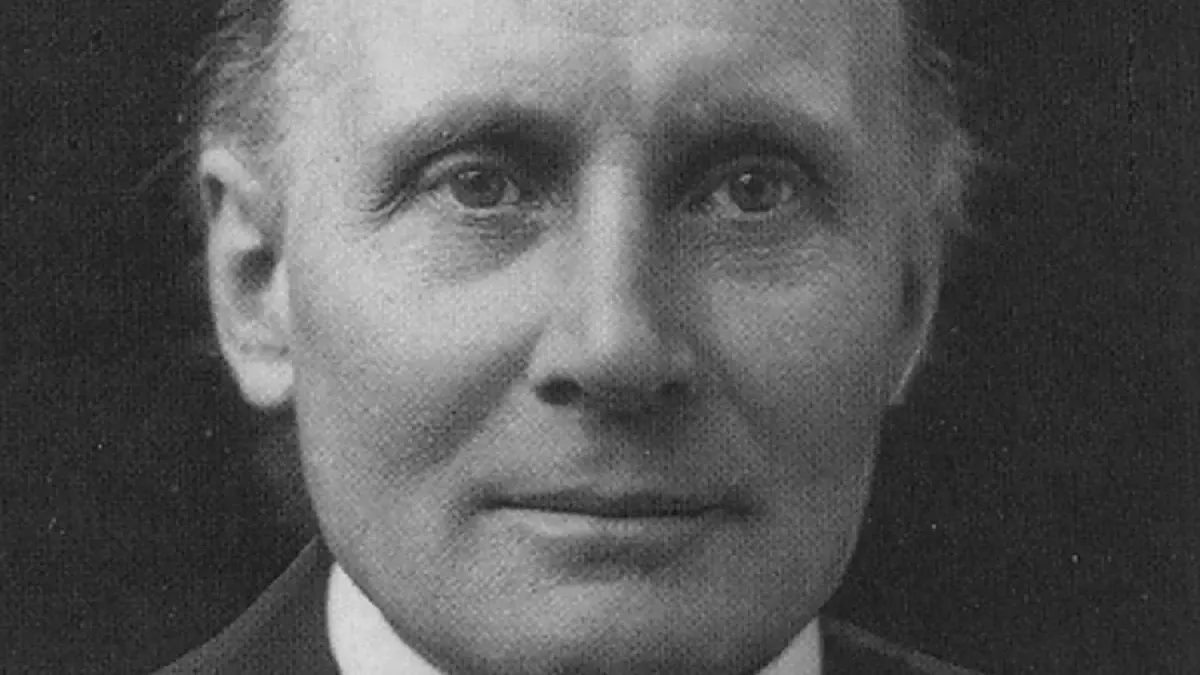
Being a True and Faithful Account of the Second Sojourn of Alfred North Whitehead, O.M., Sometime Fellow of Trinity College and Professor at Harvard, Among the Possessed of the City of New York; in Which He Encounters a Financier, a Prophet, and a Company of Coders, and Declines, With Great Courtesy, to Be Convinced.
"A man with a conviction is a hard man to change." —Festinger, Riecken, and Schachter (3)
I. The Return
He came back, as the dead sometimes do in stories of this kind, without ceremony and without explanation, which suited him, for he had spent the better part of a long life arguing that ceremony and explanation are abstractions we drape over a process too fine for either. One moment there was the long quiet after 1947; the next there was a man of about eighty-six standing on the corner of Wall and Broad in a tweed suit that no longer existed in any tailor's records, blinking at a screen the size of a barn door upon which a green number climbed and fell like a fever chart.
Alfred North Whitehead had been, in succession and sometimes simultaneously, a mathematician of the first rank, the co-author with his pupil Russell of a work that tried to derive arithmetic from logic and very nearly broke both men in the attempt, and finally—arriving at Harvard at sixty-three, an age at which most men arrive only at golf—a metaphysician. He had a single great suspicion, which he had refined over decades into a phrase of almost surgical economy. He called it the fallacy of misplaced concreteness: the error of "mistaking the abstract for the concrete" (Whitehead, Science 51), of taking the tidy diagram one has drawn of the world and then insisting that the world is obliged to be the diagram.
He had not expected to find an entire civilization organized around the fallacy. Yet here it was. The green number was an abstraction—a price, which is to say a momentary social agreement about the exchangeability of one fiction for another—and men in good shoes were watching it with the rapt and frightened devotion that his own century had reserved for eclipses.
"Remarkable," he said aloud, to no one, in the gentle Ramsgate vowels that ninety years had not sanded down. "They have built a cathedral and forgotten it is a model of a cathedral."
A young woman walking past assumed he was talking to a phone she could not see, which in New York is the most reassuring thing a stranger can be doing, and left him alone.
He decided, since he was here, to take the temperature of the age. He had always held that a philosophy ought to be tested not in the seminar but in the street, against the felt texture of how people actually live and what they actually fear. So he went looking for the people who were most certain. Certainty, in his experience, was where the abstractions had hardened most dangerously into stone—and where, therefore, the work was.
It did not take him long. The city was full of the holy and the haunted, and they were all, every one of them, reading meanings off surfaces.
II. The Financier, Who Saw the Geometry of Everything
The first was a man named Dolan, who ran what he called a "quantitative discretionary macro book" out of a glass office forty-one floors above the harbor, and who agreed to meet the old Englishman because his assistant had described the visitor as "some emeritus guy from Cambridge," and Dolan collected the appearance of intellect the way other men collect watches.
Dolan's walls were covered in charts. Not the honest charts of an honest accountant, but charts threaded with arcs and spirals and golden rectangles, overlaid with the ratios of Fibonacci and the angular fans of a Depression-era mystic named Gann, and—Whitehead noted with a slow, delighted dread—a small ephemeris, a table of planetary positions, tucked discreetly beside the second monitor.
"The market," Dolan explained, with the patience of a man explaining the sea to a fish, "looks random. To the retail crowd it looks random. But underneath there's a structure. Sacred geometry. The same ratios that show up in nautilus shells and galaxies show up in the S&P. Once you see it, you can't unsee it. I've got a Saturn-return signal that's called every major top since 2008."
"How many signals do you have?" asked Whitehead, settling into a chair that cost more than his Harvard salary for a year.
"Hundreds. Thousands, with the parameter sweeps."
"Ah." The old man folded his hands. "Then I am afraid you have discovered nothing about the market, and a great deal about hundreds of thousands. There were two excellent statisticians of my posterity—Diaconis, whom I gather was also a conjuror, which is the correct training for this subject, and Mosteller—who gave the matter its proper name. They called it the law of truly large numbers. With a large enough sample, they observed, any outrageous thing is likely to happen (Diaconis and Mosteller 859). You have not built a telescope, Mr. Dolan. You have built a very large net and are astonished to find it contains fish."
Dolan smiled the smile of a man who has heard the skeptics and priced them in. "But the signals work. I can show you the backtests."
"I am certain you can. That is precisely the difficulty." Whitehead leaned forward. "Diaconis and Mosteller noted a second principle, subtler than the first, which they called the multiplicity of endpoints—the counting of near-misses and rough resemblances as though they were exact (Diaconis and Mosteller 859). You permit Saturn to act a few days early, or a few days late. You permit a 'top' to mean any of a dozen things. You sweep your parameters until one configuration fits the past. And then—this is the lovely part—you are surprised that something fit, when you have arranged the experiment so that something must. You have given the wind its choice of athletes and called the winner skilled."
There was a silence in which the harbor glittered indifferently below.
"There was a man," Whitehead continued, "named Forer, who in 1949 performed a small unkindness upon thirty-nine of his students. He gave each of them what he claimed was a personality analysis derived from a test. In fact he gave them all the identical paragraph, stitched together from a newsstand astrology column. Then he asked them to rate its accuracy. They rated it, on average, extraordinarily high. Each student read a generic sentence—something to the effect that 'you have a great need for other people to like and admire you' (Forer 120)—and felt seen to the bone. Forer called it the fallacy of personal validation." The old man's eyes were very kind. "You feel the market has spoken to you personally, Mr. Dolan. It has done nothing of the sort. You have read your own need into a column of weather."
"The astrology's a small part of the process," Dolan said, a little stiffly.
"Then let us retire it entirely, on the evidence. A physicist named Carlson, in 1985, ran the cleanest test of the discipline anyone had yet managed, double-blinded, published in Nature—a serious place—and found no support whatever for the proposition that a natal chart describes a person better than chance (Carlson 419). Astrologers have disputed the re-analysis ever since, as is their right and their habit, but the burden was theirs and it remains unpaid." He paused. "I do not say this to wound the stars. I say it because you have hung the dignity of your judgment upon them, and they cannot bear the weight."
Dolan, to his credit, was listening now with something other than salesmanship. "So what is the market, if it's not the geometry?"
And here the old man's whole face changed, because he had been waiting, with the patience of the genuinely interested, for exactly this question.
"It is a process, Mr. Dolan. A vast concrescence of actual occasions—each transaction a moment of decision that prehends what came before and adds itself to the advancing front of the world, and is then gone (Whitehead, Process 22). It is gorgeously, irreducibly relational; every price is haunted by every other; nothing in it is simply located. It is, in short, far more wonderful than your spirals—and it has the single defect, from your point of view, of refusing to repeat itself on command. You have taken the most genuinely alive thing in your building and tried to embalm it in a ratio. The shell of the nautilus is a real spiral because the animal grows at a constant rate; the market is not an animal and does not grow at a constant rate, and when you draw the spiral on it you are not finding its structure—you are mistaking your chalk for its bones." He smiled. "Which is the fallacy I have come a long way, and through some inconvenience, to discuss."
It is recorded that Mr. Dolan took down the ephemeris that evening. It is also recorded that he kept the Fibonacci overlays, because his investors liked them and because a man must, after all, eat. Whitehead, who had lived through two world wars and the loss of a son in the first, did not begrudge him the compromise. He merely noted, on his way to the lift, that the fallacy of misplaced concreteness is rarely cured. It is, at best, managed—like a tremor, or a faith.
III. The Prophet of Numbers
The second of the possessed was harder to find and easier to talk to, which is often the way.
His name, or the name he used on the channels where he was a minor god, was Veritas77, and he received Whitehead in a finished basement in Queens that smelled of solder and cold coffee. The walls here were also covered—not with charts but with a single immense web of index cards and red string, a cosmology in twine, at the center of which was the number 17.
"They tell us," Veritas said, in the low urgent voice of a man entrusted with a terrible gift. "They always tell us. It's in the dates, the flight numbers, the executive orders. Seventeen letters in the press release. Three days before a holiday. They're required to tell us—it's part of the magic, the ritual. You just have to know how to read."
Whitehead accepted a coffee he did not intend to drink and considered the web with real admiration, the way one admires the industry of a wasp.
"You have a great deal of evidence," he said.
"Mountains."
"Yes. That is the first thing I should like to discuss." He set the coffee down. "A skeptic of my posterity, a man named Shermer, drew a useful distinction between two habits of the mind. The first he called patternicity: the tendency to find meaningful patterns in meaningless noise (Shermer, Believing Brain 60). We are descended from creatures who heard a rustle in the grass and assumed a tiger; the ones who assumed the wind were eaten, and left us fewer ancestors. So we are all of us pattern-finders by inheritance, and we have, as Shermer rather gloomily put it, no organ that distinguishes the true patterns from the false. You have a magnificent specimen of the faculty, Mr. Veritas. It is working perfectly. That is the trouble. It would find seventeens in a bowl of soup."
"But the patterns are there. I'm not making them up."
"No. You are finding them, which is different and more interesting. Consider." Whitehead took a pen and, with the unhurried precision of a man who had once filled blackboards for a living, wrote out a short passage on a card—a few lines lifted, as it happened, from a manifesto written by a famous American hermit who posted bombs. "There is a technique your code-readers use—equidistant letters, every nth character forming a hidden word. The scholars who studied it most rigorously, McKay and his colleagues, demonstrated the method on the Unabomber's own manifesto. Written round a cylinder of the right width, the words 'mail' and 'bombs' fall neatly side by side. With a little looking one finds 'Free Ted!' as well." He set down the pen. "The manifesto did not foretell its own author's nickname. It is simply long enough. McKay's people were blunt about this: the proximities can be found in 'any sufficiently long text' (McKay et al. 152). The text is not speaking to you. It is merely large, and you are thorough."
Veritas was quiet, but it was the quiet of loading, not of yielding. "Okay. But the conspiracy itself. You can't explain away the coordination. How many people it takes."
"Now that," said Whitehead warmly, "is an excellent objection, and I am delighted you raised it, because it can be answered with arithmetic rather than philosophy, which I imagine you will find more congenial." He had, he reflected, always preferred the interlocutor who pushed. "A physicist named Grimes built a small model of exactly your worry. He asked: given a conspiracy of N people, sustained over a time t, what is the probability that not one of them talks, defects, repents, drinks too much at a wedding, or is simply found out? And he found what your own life should already have told you—that the probability of silence collapses with terrifying speed as the conspirators multiply and the years accumulate. Large conspiracies, he concluded, become untenable almost at once (Grimes). The grand cabal you have drawn on this wall would have to be staffed by tens of thousands of perfectly disciplined saints, none of whom has a mortgage, a grievance, or a conscience. Mr. Veritas, I have known committees of nine that could not keep a surprise party secret for a fortnight."
"So why," Veritas asked, and here his voice cracked just slightly, in a way that told Whitehead they had at last arrived at the true subject, "does it feel so real? Why can't I stop?"
The old man was silent for a moment. He had a horror of cruelty, and he understood that he was now standing not before an argument but before a wound.
"Two researchers, Whitson and Galinsky, ran a sequence of experiments," he said gently, "in which they took ordinary people and made them feel, briefly, that they had lost control—that the world had stopped answering to their actions. And those people, every time, began to see patterns that were not there. Faces in static. Conspiracies in noise. Omens. The hunger for a hidden order, they showed, rises exactly when the sense of personal control falls (Whitson and Galinsky 115)." He let that sit. "You did not come to the web because the web is true. You came to it because the world stopped making sense to you in some particular and probably private way, and the web offered you the one thing the world had withdrawn: the promise that someone is in charge. That is the second of Shermer's habits—agenticity, the conviction that behind every pattern stands an intending agent, a hand on the strings (Shermer, Believing Brain 87). It is, I am sorry to tell you, more comforting to be persecuted by a competent devil than to be neglected by an indifferent process. A hidden master at least knows your name."
Veritas did not answer. On the wall, the red string trembled very slightly in the draft from the furnace.
"There is one more thing I should say, in fairness," Whitehead added, rising, "because it is the thing that will keep you here after I leave, and you ought to know its name so you can recognize it as a stranger rather than a friend. Three psychologists once followed a small group who believed the world would end on a particular night. The night came; the world declined to end. And the believers, faced with the plainest possible refutation, did not disperse in embarrassment. They became more fervent, and went out to proselytize as they never had before (Festinger, Riecken, and Schachter 168). When the evidence fails such a faith, the faith does not fail. It metabolizes the failure into proof. So when tomorrow's prophecy does not arrive, Mr. Veritas—and it will not—watch yourself closely. The voice that says this only proves how deep it goes is not the voice of the truth. It is the voice of the wound, protecting itself."
He left the basement and climbed up into the ordinary, unmagical evening, where the streetlights came on according to no schedule but a timer, and meant nothing, and were beautiful.
IV. The Coders
The last of the possessed were not one but several, and Whitehead approached them with the most care, because they were learned, and gentle, and because the thing they had taken hold of was, unlike a quant's spirals or a stranger's red string, genuinely four thousand years deep.
They met in a study lined floor to ceiling with books in a language that read from the wrong side, and the youngest of them, a man named Aaron with a laptop and a light in his eyes, did most of the talking. He ran a program. He had been finding things in the Torah—names of the recently dead spelled in equidistant letters, falling near the dates of their deaths, against odds he calculated at one in many tens of thousands.
"The text is a hologram," Aaron said. "Every event since creation is folded into it. We're only now building the instruments to read what was always there."
Whitehead listened to the whole of it without interrupting, which took some time, and when Aaron was finished the old man did not reach immediately for the refutation. He reached instead for respect, because he had learned long ago that you cannot lift a man out of an error you have not first taken seriously enough to understand.
"What you describe," he said, "was claimed once before, in a paper that became, I am told, very nearly the most-printed scientific article in history—Witztum, Rips, and Rosenberg, the famous rabbis and their dates, in a respectable statistical journal, in 1994. And it was answered, with extraordinary thoroughness and not a little affection for its subject, by four scholars—McKay, Bar-Natan, Bar-Hillel, and Kalai—in the same journal five years on. I should like to walk you through what they found, not to humiliate the codes, but because I think you will find the truth of the matter more beautiful than the codes, as I almost always do."
Aaron, who was a scholar before he was a believer, inclined his head. This is the mark of the generative tradition, Whitehead would later reflect: even captured by an error, it retains the manners of inquiry.
"Their first finding," said Whitehead, "concerned not the text but the freedom. The rabbis of the experiment had many names apiece—formal names, acronyms, nicknames, variant spellings. The dates could be written several ways. And the experimenters chose, from this enormous bin of possibilities, a particular handful. McKay's people called the available latitude 'enormous wiggle room' (McKay et al. 152), and they asked the decisive question with great precision: was there enough freedom in the conduct of the experiment that a small significance level could be obtained merely by exploiting it (McKay et al. 153)? And then—this is the part I find irresistible—they answered it by demonstration. They used a sliver of the same freedom to mine the Hebrew translation of War and Peace, and produced 'codes' there fully as impressive as the ones in Genesis." He spread his hands. "Tolstoy, you will agree, did not encode the rabbis. The signal was never in the book. It was in the choosing."
A silence settled over the study, but it was a different silence than Dolan's or Veritas's. It was the silence of men who knew, in the disciplined back rooms of their minds, that a real objection had been raised.
"There is a detail in the history," Whitehead went on, more softly, "that has always moved me. When the work was first circulated, it came to the attention of the statistician Diaconis—the same conjuror I mentioned to a financier this morning, the world's great authority on exactly this kind of coincidence. And Diaconis, trying to help, asked only that the experiment be run cleanly: a proper randomized test, a fresh sample of fresh names chosen in advance by someone with no stake in the outcome (McKay et al. 155). These are not the demands of an enemy. They are the demands of a friend who wants your discovery to survive. And the requests were, by the account of McKay's group, deflected and declined. The fresh sample was refused." He looked at Aaron with great gentleness. "When a discipline will not let its dearest result be tested by a sympathetic stranger, the discipline already suspects the answer. The reluctance is the confession."
Aaron's voice, when it came, was lower. "But you can't prove the codes aren't there."
"No," Whitehead agreed at once. "I cannot, and neither could they, and they said so plainly. One cannot prove a universal negative; that is not a weakness of their argument but a fact about the world. What McKay's people did instead was the honest and harder thing. They ran the variations—hundreds of small, reasonable changes to the experiment—and found that the result grew weaker in the great majority of them, as if the original had been quietly tuned to its best possible face (McKay et al.). And then they added the consideration that I suspect you, of all people, already know in your bones." He nodded toward the wrong-way books. "The text itself. The Torah you read has come down to us across millennia of scribes, each copying by hand, with variant letters and disputed spellings documented in your own tradition's vast and beautiful apparatus of commentary. The text is not, letter for letter, the text of three thousand years ago. McKay's group put it carefully: no code of the kind claimed could have survived the long transmission of the text intact (McKay et al. 171). The hologram, if it existed, has been gently smudged by every faithful hand that ever loved the book enough to copy it. Your scribes did not corrupt the code. They were the code's undoing, by the simple act of devotion."
It was at this point that the oldest man in the room spoke for the first time. He had not touched the laptop all evening. He was perhaps ninety himself, with the stillness of a man who had made his peace with not knowing things, and he addressed Whitehead in English softened by Yiddish and by Galician winters long ago.
"You are right about the program," the old man said. "I have told them. The Holy One does not hide His meaning in a spreadsheet." He said the word with a delicate contempt that made even Whitehead smile. "When I was young we did not look for the dead in the spaces between the letters. We sat with the letters themselves—we turned them, we argued with them, we let them open us. The gematria, the counting, was never a machine for predicting the news. It was a discipline of attention. A way of slowing down enough to be addressed." He waved a hand at the laptop as one waves away a fly. "They have taken a practice of humility—of standing before a text larger than yourself—and turned it into a practice of mastery, of standing over a text and squeezing it for secrets. This is not too much religion. It is too little. They have made the infinite small enough to fit on a screen, and called the shrinking a discovery."
Whitehead was quiet for a long moment, and when he spoke there was something in his voice that had not been there with the financier or the prophet.
"You have said it better than I could," he told the old man, "and you have said the thing I most wanted to reach. There is a true tradition here, and a parasite that has learned to wear its clothes. The true tradition is generative—it has, as you say, its own brakes: its humility, its arguments, its refusal to claim the last word, its long memory of how often the certain have been wrong. The parasite keeps the surface—the counting, the correspondences, the air of hidden depth—and saws off precisely the brakes. It keeps the mysticism and discards the modesty. And so it can run faster than the real thing, and arrive sooner at a confident falsehood, and look, to the untrained eye, more spiritual rather than less." He turned back to Aaron, not unkindly. "Your program is not too holy, Aaron. It is not holy enough. It has all the apparatus of reverence and none of the restraint. The old man's gematria could survive being wrong, because it was never wagering its whole soul on being right. Yours cannot. That is how you may always tell them apart."
Aaron closed the laptop. He did not, that night, renounce anything; men of his seriousness do not renounce things in an evening, and Whitehead would have distrusted him if he had. But he closed the laptop, and he poured the old men tea, and the conversation turned, as the best conversations do, away from being right and toward the text itself—a verse, a difficulty, a quarrel six centuries old and still warm. Whitehead stayed for it. He had not enjoyed an argument so much since Cambridge.
V. Coda: The Real Thing
He walked back across the bridge near midnight, an old man who was not technically alive, and the city poured its light into the black water and the light meant nothing and was, again, beautiful.
He thought about the day's three encounters and found that they rhymed. The financier had committed patternicity—he had seen geometry in the noise. The prophet had committed agenticity—he had set a hand behind the geometry. The coders had committed the subtlest version of both: they had found patterns in the most beloved text of their people and placed behind those patterns the highest possible Agent, which made the error nearly impossible to dislodge, because to doubt the code felt like doubting God. But all three were, beneath the surface, a single error wearing three coats: the fallacy he had named seventy years and one lifetime ago. Each had drawn a model and then fallen in love with the model and then forgotten it was a model and finally begun to live inside it, mistaking the map for the country, the abstraction for the concrete (Whitehead, Science 51).
And there was a fourth thing, larger than the three, that he had felt all day like a pressure in the air—the ambient medium of the whole city, the sea in which the three fish swam. He had heard it in the conference rooms and the podcasts leaking from passing cars and the inspirational posters in the lobby of Dolan's building: a vast, syntactically perfect, semantically empty profundity, the kind that researchers named Pennycook would later put under glass. They had shown experimental subjects sentences assembled from spiritual buzzwords by an algorithm with no mind and no meaning—"wholeness quiets infinite phenomena" (Pennycook et al. 549) and the like—and found that a great many people rated the noise as deeply profound, and that the people most apt to do so were the least apt to stop and ask whether the words actually meant anything (Pennycook et al. 552). The city ran on this. It was the carrier wave beneath the codes and the spirals and the string. It was misplaced concreteness in its larval form: meaning attributed before meaning is checked, depth felt before depth is found.
He should, by every expectation, have been the perfect enemy of all of it—the cold logician, the Cambridge skeptic, the man who had tried to build mathematics out of dust. And here was the joke at the center of his long second day, the joke he savored most, walking over the black and glittering river:
He believed in connection more deeply than any of them.
That was the thing the financier and the prophet and the young coder had never understood—had gotten, in fact, exactly backward. They thought the skeptic was a man with a small, dry universe, a universe of isolated facts and dead matter, who went about with scissors cutting the lovely threads that bound things together. But Whitehead's whole philosophy, the labor of his last and best decades, was a doctrine of radical relation: a cosmos in which nothing is simply located, in which every actual occasion prehends the entire universe that precedes it and hands itself forward into all that follows, in which the world is not a heap of things but a living and unfinished process, related to itself at every point (Whitehead, Process 18–22). He did not debunk the codes because he found the universe too disenchanted to contain hidden meaning. He debunked them because he found the universe far too enchanted to be insulted by their cheapness. The real interconnection of things was so much vaster and stranger than a seventeen in a flight number that to mistake the one for the other was a kind of blasphemy against wonder—a settling, a foreclosure, the trading of an infinite live process for a finite dead trick.
This was, he decided, the only sermon worth preaching to the possessed, and he composed it for no one, over the water, in the dark:
The problem with your codes is not that they find too much meaning in the world. It is that they find too little, and call it everything. You have a hunger for hidden order, and the hunger is right—the world is hidden order, all the way down, order without a bottom. But you have answered the world's actual depth with a parlor trick, and accepted the trick because it could be held in the hand, and a real cosmos cannot be held in the hand. Seek simplicity, by all means. We must; we are small and the world is not. But then—and this was the whole of his teaching, four words he had written once and would die by—distrust it. Seek your simplicity and then distrust it. Hold your beautiful model loosely enough that the world can correct it. That is the entire difference between a science and a séance, between the gematria of the humble old man and the spreadsheet of the proud young one. Not the presence of pattern. The willingness to be wrong about it.
The bridge ended. The city took him back. Somewhere behind him a green number was still climbing and falling in an empty office, meaning nothing, indifferent to its watchers, and on a wall in Queens the red string held its shape in the dark, and in a study full of books a kettle was going on again, and four thousand years of argument continued, as it should, without resolution and without end.
Alfred North Whitehead walked into the lights, content. He had convinced no one, which was correct; conviction was their disease, not his cure. He had only, here and there, in three rooms, loosened a single thread—introduced, into a closed and certain system, the one reagent it could not survive, which was doubt offered as a kindness rather than an attack.
It was, he thought, enough work for a dead man's day. Tomorrow he would find the wellness influencers. He was, against all his better judgment, rather looking forward to it.
Works Cited
Carlson, Shawn. "A Double-Blind Test of Astrology." Nature, vol. 318, no. 6045, 1985, pp. 419–25.
Diaconis, Persi, and Frederick Mosteller. "Methods for Studying Coincidences." Journal of the American Statistical Association, vol. 84, no. 408, 1989, pp. 853–61.
Festinger, Leon, Henry W. Riecken, and Stanley Schachter. When Prophecy Fails: A Social and Psychological Study of a Modern Group That Predicted the Destruction of the World. U of Minnesota P, 1956.
Forer, Bertram R. "The Fallacy of Personal Validation: A Classroom Demonstration of Gullibility." Journal of Abnormal and Social Psychology, vol. 44, no. 1, 1949, pp. 118–23.
Grimes, David Robert. "On the Viability of Conspiratorial Beliefs." PLOS ONE, vol. 11, no. 1, 2016, e0147905.
McKay, Brendan, Dror Bar-Natan, Maya Bar-Hillel, and Gil Kalai. "Solving the Bible Code Puzzle." Statistical Science, vol. 14, no. 2, 1999, pp. 150–73.
Pennycook, Gordon, et al. "On the Reception and Detection of Pseudo-Profound Bullshit." Judgment and Decision Making, vol. 10, no. 6, 2015, pp. 549–63.
Shermer, Michael. The Believing Brain: From Ghosts and Gods to Politics and Conspiracies—How We Construct Beliefs and Reinforce Them as Truths. Times Books, 2011.
Whitehead, Alfred North. Process and Reality: An Essay in Cosmology. 1929. Corrected ed., edited by David Ray Griffin and Donald W. Sherburne, Free Press, 1978.
---. Science and the Modern World. 1925. Free Press, 1967.
Whitson, Jennifer A., and Adam D. Galinsky. "Lacking Control Increases Illusory Pattern Perception." Science, vol. 322, no. 5898, 2008, pp. 115–17.