E032. In luce celatum I: The Ought Disguised as the Is
A Genealogy of Three Erasures in Enlightenment–Colonial Historiography. De-naming · De-timing · De-causing.
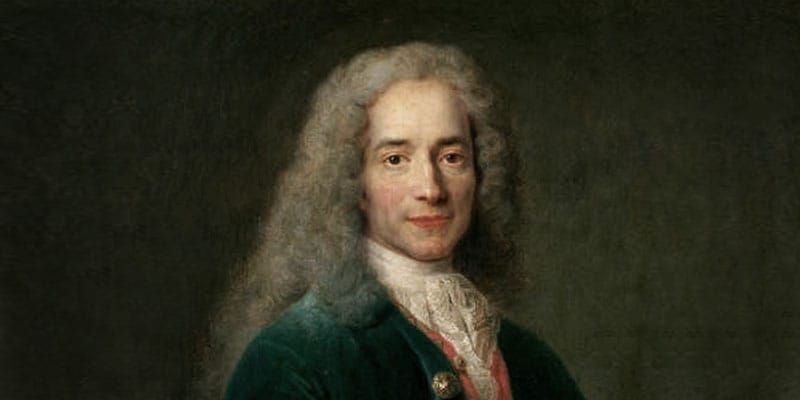
"This unworthy collection contains only declamations and miracles: it is the disgrace of the human mind, just as the Greek empire was the reproach of the earth." — Voltaire, Le Pyrrhonisme de l'histoire (1769)
"I have described the triumph of barbarism and religion." — Edward Gibbon, The History of the Decline and Fall of the Roman Empire, ch. 71 (1788)
Prefatory Note on Method
There is a species of intellectual offence that leaves no corpse. It is committed not by lying about the past but by namingit, dating it, and accounting for it in ways that fold a verdict into what presents itself as a mere description. The historian who works in this register need never assert a single falsehood. He need only select his vocabulary, draw his periods, and choose his causes — and the moral judgment he wished to pronounce will arrive at the reader disguised as a fact discovered rather than a sentence passed.
This monograph concerns three such offences, committed serially against a single victim — the Eastern Roman Empire and, behind it, the entire medieval millennium — by a tradition that ran from the humanist study of Greek manuscripts in the sixteenth century through the philosophes of the eighteenth and into the imperial scholarship of the nineteenth. The charge is not that these historians were stupid; several were the most luminous minds of their age. The charge is precisely the opposite: that their brilliance was deployed to perform a conversion of the is into the ought so elegant that it has survived, largely uninspected, into the working vocabulary of the present. We still say "byzantine" to mean labyrinthine and corrupt. We still say "the Dark Ages" and imagine, against all evidence, a void. We still narrate the past as though only human will moves it, as though no volcano, no bacillus, no failed harvest ever bent the arc of an empire.
The thesis is compact. Enlightenment–colonial historiography purported to write the natural history of man — the dispassionate record of what was — and in fact wrote a normative history, a record of what ought to have been honoured and what ought to have been despised. In the act of disguise, it systematically deleted three things: the self-naming of its subjects (an erasure in language), the self-understanding of an entire age (an erasure in time), and the non-human causation that shaped events (an erasure in cause). These are not three complaints loosely bundled. They are three operations of a single engine, and the engine has a name: the conversion of history into a moral drama of progress, in which the past is arranged not as it stood to itself but as it must stand if the present is to be flattered as the destination.
A word of self-restraint, in keeping with the Regnis commitment to self-falsifying models. To attack Gibbon and the philosophes is to court the most predictable of misreadings — that one is a romantic, a medievalist sentimentalist, a smuggler of nostalgia who wishes to crown Byzantium with the haloes its detractors denied it. This monograph does no such thing. To object to the name "Byzantine" is not to beatify the empire it mislabels; it is to expose the normativity concealed inside an apparently neutral act of christening. To object to "the Dark Ages" is not to claim the seventh century was a salon. The argument operates one level up: it is not about whether the verdict was correct but about whether a verdict was being delivered under the costume of a description. The reader who finishes this essay believing its author prefers Constantinople to Rome has read a different essay. The point is colder than preference. The point is the smuggling.
I. The Engine
Before the three erasures, the engine that drives all three.
Hume called his own century "the historical age," and Gibbon, accepting the compliment, set out to write its masterpiece.[^1] But the eighteenth-century idea of history carried within it a structural temptation that the philosophes did not invent and could not see, because they were standing inside it. The temptation is this: if history is the record of the progress of the human mind toward liberty and reason — its liberty, its reason — then every age must be assigned a position on that ascending line. And once an age has been assigned a position, the description of that age and the valuation of that age become a single operation. To say where a thing falls on the line of progress is already to say how much it is worth.
This is the move that converts is into ought without anyone noticing the seam. The historian believes he is reporting a location ("this is where the Greek empire stood"). He is in fact issuing a sentence ("this is what the Greek empire deserved"). The vocabulary of decline — decadence, degeneration, corruption, effeminacy, superstition — is presented as diagnostic, the cool nomenclature of a physician over a chart. It is in truth juridical, the language of a court. Montesquieu, whose Considérations of 1734 furnished the template, made the juridical character explicit and even congratulated himself on it: liberty makes peoples live and despotism kills them, expiation follows fault, fortune ranges itself on the side of virtue.[^2] These are not the propositions of a natural historian. They are the propositions of a moralist who has discovered that history can be made to deliver his verdicts for him, with the added authority of seeming to be Nature's own.
The remainder of this essay traces what that engine did to its three victims — and it is essential to see that the three are not interchangeable. They are erasures at three different strata of historical representation, and naming the strata precisely is half the argument:
| Erasure | What was deleted | Stratum of violence |
|---|---|---|
| De-naming | The subject's own name for itself (Rhōmaîoi) | the lexical — seizure of the name |
| De-timing | An age's understanding of its own continuity | the chronological — imposition of a normative period |
| De-causing | Non-human agency (climate, contagion, harvest) | the causal — restriction of agency to human will |
The first is a crime against language. The second is a crime against time. The third is a crime against the very model of causation. They share a single motive — the protection of the progress-drama — but they operate by different mechanisms, and a serious indictment must try each count separately before it sums them.
II. De-naming: The Seizure of the Roman Name
The fact the name was built to bury
Begin with the datum that the whole apparatus of "Byzantium" exists to obscure: the people we call Byzantines never used the word, and never stopped calling themselves Romans. This is not a subtlety recoverable only by specialists. It is the flat, central, documented fact of the matter. The inhabitants of the Eastern Empire styled their polity the Basileía tôn Rhōmaíōn — the Empire of the Romans — and themselves Rhōmaîoi, Romans, a citizenship inherited in unbroken legal descent from the Antonine Constitution of 212, which had made every free inhabitant of the empire a Roman citizen.[^3] Their law was the Corpus Juris Civilis of Justinian; their emperor was basileús, the Greek rendering of Augustus; their capital was New Rome, a title not poetic but constitutional. The continuity was not a claim they advanced defensively. It was the unremarkable water they swam in, sustained without interruption from the fourth century to the Ottoman conquest of 1453.
The modern field that studies these people has, in the last decade, been forced to confront the violence embedded in its own name. Anthony Kaldellis, in Romanland (Harvard, 2019), states the case with a bluntness that the discipline received as provocation: the Greek-speaking majority of the Eastern Empire "would have identified as Roman," an identity "so strong in the eastern empire that even the conquering Ottomans would eventually adopt it," and Western scholarship has nonetheless maintained "a long tradition of denying the Romanness of Byzantium."[^4] Kaldellis traces the sequence of the dispossession precisely: "In the Middle Ages, people of the eastern empire were labeled 'Greeks,' and by the nineteenth century they were shorn of their distorted Greekness and became 'Byzantine.'"[^5] Two names imposed, in two stages, each stripping a layer: first Roman is replaced by Greek, then Greek is replaced by Byzantine. At the end of the operation the subject has been renamed twice and consulted never. Kaldellis has since pressed the logic to its terminus, calling for the abolition of "Byzantine Studies" as a category and its replacement by "East Roman Studies" — a field that would "bear the epithet 'Roman' instead of 'Byzantine'" and run from Augustus to 1453 as a single continuous object.[^6]
Phase one: the humanist coinage (1557)
The name was minted in Augsburg. Hieronymus Wolf, a German humanist working in the library of the Fugger banking family, published in 1557 his Corpus Historiae Byzantinae, a collection of medieval Greek sources, and in titling it applied the adjective Byzantine — drawn from Byzantion, the ancient Greek colony on whose site Constantinople was founded — to the empire as a whole.[^7] This was not, at first, the weaponised concept it would become. Recent scholarship is careful here, and the care strengthens rather than weakens the indictment. Wolf did not coin the term to distinguish Eastern from Western Romans on some principled ethnographic ground; he "built on a Western medieval tradition of treating the empire as 'the empire of Constantinople,' which in a more antiquarian idiom becomes 'the empire of Byzantium.'" For Wolf, as for most Western scholars down to the nineteenth century, this was simply "the empire of the Greeks" — and Western sources had been questioning the Romanness of the East by calling it Greek since the second half of the eighth century.[^8]
But the coinage was not innocent of motive, and the motive was confessional and geopolitical. Wolf was a Protestant in the Augsburg of the post-Reformation, and the act of naming served to place an intellectual distance between himself and both the Catholic Rome of the papacy and the Orthodox Constantinople of the Greeks.[^9] The naming sat, moreover, inside a live imperial contest over the Roman inheritance itself: the Ottoman sultans claimed the title Kayser-i Rûm — Caesar of Rome — and the Habsburgs claimed Kaiser der Römer, the two sieges of Vienna in 1529 and 1683 being, at the level of symbolism, a war over which of them was the true Rome.[^10] To detach the medieval Greeks from the name "Roman" was, in this context, to clear the field of a third claimant — to ensure that the contest over Romanitas remained a Western, Latin, Christian affair. The name was political from its first breath. It is only the kind of politics that changed across the phases that follow.
The recent collective re-examination of this founding moment — The Invention of Byzantium in Early Modern Europe(Dumbarton Oaks, 2021), edited by Aschenbrenner and Ransohoff — frames the conceptual stakes exactly. The rise of "Byzantium," they write, "displaced other notions about what the empire was (e.g., Roman, Greek), detached it from previous narratives, and asserted it as a distinct and separate civilization with its own 'essence' that could and should be studied by a discrete scholarly discipline."[^11] The question, they insist, "is not merely lexicographical but conceptual." Just so. To grant a thing its own name is to grant it its own essence; and to assign that essence is, as we shall see, to license the verdict that the philosophes were waiting to deliver. The same scholarly volume locates the founding gesture squarely within the histories it would prefer to forget: Wolf's earliest Byzantine scholarship is now read, by his own editors' successors, "at the intersection of slavery, colonialism, and the Crusades."[^12]
Phase two: the Enlightenment caricature (Montesquieu, Voltaire)
A scholarly label became a moral verdict in the eighteenth century, and it did so in French. The standardisation of "Byzantine" as the name for the empire — its passage from a humanist's bookplate into the common European vocabulary — was the work of the philosophes, Montesquieu chief among them.[^13] And the philosophes did not adopt the term neutrally. They adopted it because it was useful — because a thousand years of Roman continuity, renamed and detached, could be made to serve as the great cautionary exhibit of Enlightenment political theology: the spectacle of what becomes of a polity that surrenders civic virtue to despotism and reason to superstition.
Montesquieu, in the Considérations sur les causes de la grandeur des Romains et de leur décadence (1734), supplied the master-frame. The arc he drew ran from the citizen-army of the early Republic, through the corruption of mœurs and the mercenary armies that became "the instrument of despotism," to the slow ruin of the West and finally the fall of the East.[^14] Into this descending line he folded the East as the terminal stage of a single decadence, and the vocabulary he chose has stuck to the empire for three centuries: he wrote of "toutes les misères byzantines" — all the Byzantine miseries — as the natural endpoint of a polity that had abandoned liberty.[^15] The phrase is doing the entire work of the engine described above. "Miseries" is presented as observation; it functions as sentence.
Voltaire pressed harder and abandoned even the pretence of diagnosis. In Le Pyrrhonisme de l'histoire (1769), surveying the writing of history after Tacitus and lamenting the corruption of objectivity by Christian piety, he arrived at the East and delivered the verdict that has echoed ever since: "There is another history even more ridiculous: that is Byzantine history. This unworthy collection contains only declamations and miracles: it is the disgrace of the human mind, just as the Greek empire was the reproach of the earth."[^16] Observe the two erasures fused in a single sentence. Voltaire does not recognise the Romans on their own terms: he names their history "Byzantine" and their state "Greek" in one breath — performing the de-naming — and in the same stroke pronounces the moral sentence ("disgrace," "reproach") that the de-naming was designed to license. The contempt is not incidental to the nomenclature; the nomenclature exists to carry the contempt. This is the engine running at full visibility: a description that is wholly a verdict, a piece of natural history that is entirely a moral one.
Phase three: the Gibbonian synthesis (1776–1788)
Gibbon gathered the inheritance and gave it the authority of a monument. And here the indictment must be scrupulous, because Gibbon was not Voltaire: he was a greater historian, more curious, more capable of entering a worldview he despised, and the modern scholarship — above all the six volumes of J. G. A. Pocock's Barbarism and Religion — has rightly complicated the cartoon of Gibbon-as-mere-sneerer.[^17] The scrupulous version of the charge is therefore not that Gibbon failed to read his sources but that, having read them, he subordinated a millennium to a thesis of unbroken decline that the sources themselves contradicted — and that he knew, on some level, contradicted them.
The thesis is compressed into the most famous sentence he ever wrote. Reviewing the ruin of the ancient world, Gibbon offered his own epitaph for it: "I have described the triumph of barbarism and religion."[^18] Encyclopædia Britannica, no partisan of Byzantium, reads the line correctly as the epigrammatic distillation of his entire causal vision — the decay of the Greco-Roman world explained as the joint victory of the brute (barbarism) and the credulous (religion) over the free and rational.[^19] This is Montesquieu's progress-drama hardened into an explanatory principle and extended across volumes.
What Gibbon did to the East specifically is best shown in his own words at the threshold of his Byzantine chapters. At the opening of chapter 48 — the chapter in which he proposed to dispatch six hundred years of Eastern Roman history at speed, precisely because it bored and disgusted him — he wrote that as one sinks "deeper in the decline and fall of the Eastern empire, the annals of each succeeding reign would impose a more ungrateful and melancholy task. These annals must continue to repeat a tedious and uniform tale of weakness and misery."[^20] And then the image that says everything: "the fate of the Greek empire has been compared to that of the Rhine, which loses itself in the sands, before its waters can mingle with the ocean."[^21] A thousand years of statecraft, law, theology, and survival against Persians, Avars, Arabs, Bulgars, Rus', and Turks — reduced to a river dribbling away into sand, unworthy even of the historian's sustained attention. The Roman name itself, he adds, "is reduced to a narrow corner of Europe, to the lonely suburbs of Constantinople."[^22]
Here the modern scholarship turns on Gibbon with his own evidence, and the contradiction is fatal and well-documented. Britannica again, summarising the consensus: Gibbon "asserted that the long story of empire in the East is one of continuous decay, yet for 1,000 years Constantinople stood as a bulwark of eastern Europe," and this insistence on uniform decline "constitutes the most serious defect of the second half of Gibbon's history."[^23] The same source notes the methodological root of the failure: Gibbon "was not only out of sympathy with Byzantine civilization; he was less at home with Greek sources than with Latin."[^24] The man who pronounced the millennium "tedious and uniform" was, by the admission of the tradition that venerates him, working at the edge of his linguistic competence and against the grain of his own data. The verdict preceded the evidence. The ought was in place before the is was read.
What the de-naming accomplished
Tally the operation. A people who called themselves Romans for over a thousand years were renamed "Greeks" by their medieval Western rivals, then renamed again "Byzantines" by a humanist's bookplate, then fitted by the philosophes with a vocabulary of misery and disgrace, and finally consigned by Gibbon to a single uniform tale of weakness — a river lost in sand. At no stage was the subject's own self-understanding admitted as evidence. The name "Byzantine" is not a neutral coordinate on the map of the past. It is, as the current historiography increasingly concedes, the visible scar of a normative judgment performed in the costume of a description — the de-naming by which an empire was first stripped of its name and then convicted under the alias.
III. De-timing: The Manufacture of the Dark
A pattern that repeats
The second erasure rhymes with the first, and the rhyme is itself the discovery. If de-naming seizes a subject's name, de-timing seizes a subject's time — it imposes upon an age a periodisation that the age would not have recognised and that exists to deliver a verdict. And the structural identity between the two operations is exact: both invert a prior valuation, both are performed by a small number of namers, both pass into common speech as neutral fact, both conceal an oughtinside an is. The "Dark Ages" and "Byzantium" are the same crime committed in two different dimensions — one in time, one in language. To see them as a single engine running twice is to understand the whole machine.
The inversion (Petrarch, 1330s)
The darkness was invented by a poet, and it was invented as a reversal. The Christian tradition had long possessed the metaphor of light against dark to mean good against evil, with classical antiquity figuring as the dark age precisely because it lacked Christ. Francesco Petrarch, in the 1330s, performed the decisive inversion: he was the first to take this metaphor and "give it secular meaning by reversing its application."[^25] Classical antiquity, "so long considered the 'dark' age for its lack of Christianity, was now seen by Petrarch as the age of 'light' because of its cultural achievements, while Petrarch's time, allegedly lacking such cultural achievements, was seen as the age of darkness."[^26] An Italian humanist, dazzled by the Latin he was rediscovering and contemptuous of the centuries between himself and Cicero, simply switched the poles of the metaphor. What had been dark became light; what had been the age of faith became the age of gloom.
The crucial point for the present argument is that this was, from its first instant, a normative act dressed as a descriptiveone. Petrarch did not discover that the intervening centuries were dark. He decided it, on the criterion of secular-cultural achievement that he himself had erected as the measure of light. The periodisation and the valuation were a single gesture. As with "Byzantine," the name does not report a property of the thing; it imposes a verdict and then presents the verdict as a property.
The sharpening (Enlightenment anti-clericalism)
The metaphor then did precisely what the Byzantine name did: it passed from the humanists to the philosophes, who sharpened it for their own war. Petrarch had deployed "darkness" mainly to deplore a deficit of secular achievement. In Enlightenment hands the metaphor "was sharpened to take on a more explicitly anti-religious and anti-clerical meaning."[^27] The darkness was no longer merely a cultural lull; it became the long night of priestcraft, the millennium in which the Church had smothered reason — the same indictment, note, that Gibbon would compress into "the triumph of barbarism and religion." The two erasures are not merely parallel; they converge on the same enemy and serve the same drama.
And then the metaphor performed its most revealing trick, the one that exposes the whole machinery as a moving sentence rather than a fixed fact. The darkness migrated forward in time to keep pace with the self-congratulation of each successive present. The historiographical record is explicit and, for the argument, decisive: even later humanists, who no longer saw themselves as living in a dark age, were judged insufficiently luminous by the eighteenth-century writers "who saw themselves as living in the real Age of Enlightenment."[^28] The Enlightenment relit the darkness over the very centuries when, as the same scholarship dryly observes, "the power and prestige of the Church were at their height" — negating the original religious logic of the metaphor entirely, because the metaphor had never been about religion as such. It had always been about one thing only: the need of a present to constitute itself as light by constituting its past as dark.[^29] The "Dark Ages" is not a period. It is a shadow cast backward by whoever currently holds the lamp.
The crystallisation (Burckhardt, 1860)
The contrast was then set in scholarly stone in the nineteenth century. Jacob Burckhardt's Die Cultur der Renaissance in Italien (1860) gave the opposition between medieval darkness and Renaissance light its canonical academic form, delineating the "dark ages" of the medieval period against the enlightened revival that had recovered antiquity.[^30] By the high nineteenth century the term was the common coin of historians, and only in the early twentieth did the radical re-evaluation of the Middle Ages begin to call the terminology of darkness — or at least its pejorative use — into question.[^31] The trajectory is identical to that of "Byzantine," beat for beat: a humanist inversion, an Enlightenment weaponisation, a nineteenth-century crystallisation into scholarly orthodoxy, and only belatedly a twentieth-century reckoning. Two erasures, one engine, two victims — the medieval West and the medieval East — convicted by the same court under the same costume of description.
IV. De-causing: The Expulsion of the Non-Human
The deepest of the three
The third erasure is the most consequential, because it is not a crime against a name or against a period but against the model of causation itself. Where de-naming and de-timing deliver verdicts on agents, de-causing concerns which agents are admitted to exist. And the Enlightenment–colonial historiography, having staged the past as a moral drama of human liberty and human virtue, could admit only human agents to the stage. A history whose entire purpose is to praise civic virtue and blame despotic vice has no role for a volcano. The collapse of a harvest cannot be a moral exemplum. A bacillus cannot be cowardly. And so the non-human causes — climate, contagion, the failure of the rains — were not so much denied as rendered invisible by the genre, expelled from the cast because the play had no part for them. To restore them is not a footnote to the indictment. It is the indictment's deepest stratum, because it shows that the ought had reached all the way down into the historian's account of what kinds of thing are permitted to move events at all.
A warning before restoration: the mirror-error
Here the Regnis commitment to self-falsification must be enforced with particular severity, because the restoration of non-human causation has its own characteristic perversion, and it is the exact mirror-image of the error we are attacking. If the Enlightenment sin was to expel nature and admit only human will, the equal and opposite sin is environmental determinism — the expulsion of human will and the admission only of nature, the claim that climate or microbe simply decided history and that men were its passive substrate. This is not an improvement on the progress-drama. It is the same erasure inverted: where the philosophes made human virtue the sole cause and dressed a moral verdict as natural history, the determinist makes nature the sole cause and dresses a different evasion as science. Both delete the interaction in which actual causation lives.
The correct model — the only one that escapes both errors — is combined causation: the exogenous shock and the human institution as joint and mutually conditioning causes, in which climate and contagion operate not directly upon "history" but through specific institutional, fiscal, and demographic vulnerabilities, which themselves are the product of human choices. The volcano does not reconquer or fail to reconquer Italy. The volcano darkens the sky; the failed harvests follow; the weakened population meets a bacillus; the depopulated countryside cannot be taxed; the unpaid army cannot be reinforced; and an emperor's choice about whether to forgive the tax arrears of the dead then determines whether the state bends or breaks. Nature sets the terms; institutions transmit them; men decide within them. Anyone who tells the story with only one of these three is telling a moral fable, whichever one they choose.
What follows is offered as the single best-documented case of combined causation in the period this monograph concerns — and, not coincidentally, it falls in the reign of Justinian, at the precise moment the Enlightenment drama identified as the high-water mark before the "tedious and uniform" descent.
The exogenous shock: the volcanic winter and the Late Antique Little Ice Age
The science here is recent, hard, and drawn from natural archives that cannot be accused of medieval bias. In 2016 a team led by Ulf Büntgen, using tree-ring chronologies from the Russian Altai and the European Alps, reconstructed Northern Hemisphere summer temperatures across two millennia and identified "an unprecedented, long-lasting and spatially synchronized cooling following a cluster of large volcanic eruptions in 536, 540 and 547 AD," sustained by ocean and sea-ice feedbacks and a solar minimum. They named the resulting period — roughly 536 to 660 — the Late Antique Little Ice Age (LALIA).[^32] The cooling was severe: on the order of up to 2°C of summer cooling across most of the Northern Hemisphere, the most pronounced and longest-lasting of the past two thousand years.[^33] The eruption of 536 produced a dust veil that, contemporaries recorded, dimmed the sun for months; the cumulative veil from the eruption cluster persisted in varying degrees for up to eighty years.[^34] This is not literary embroidery. It is written in the wood of trees that grew through it and the layers of ice that fell through it.
The transmission: the Justinianic Plague
Onto this cold, hungry world arrived the bacillus. The Justinianic Plague — the first recorded pandemic of Yersinia pestis, confirmed by ancient DNA from sixth-century skeletal remains[^35] — emerged at the Egyptian port of Pelusium in 541 and reached Constantinople in the spring of 542.[^36] The Büntgen team explicitly proposed the cold phase "as an additional environmental factor contributing to the establishment of the Justinian plague," alongside the transformation of the Eastern Roman Empire, the collapse of the Sasanian Empire, and the great migrations out of the steppe.[^37] The mechanism of combination is precisely the one demanded above: the cooling produced crop failure and famine; famine produced malnutrition and immune suppression; and a weakened population met the bacillus with diminished resistance. Climate did not create the pathogen — it amplified the catastrophe the pathogen could inflict.[^38]
The institutional transmission and the human decision
Now the crucial link, the one that converts a story about nature into a story about combined causation: the shock travelled into the life of the empire through its fiscal and military institutions, and was modulated by an emperor's deliberate choices.
The contemporary historian Procopius — an eyewitness, the principal narrative source, no friend of climate science — recorded the mechanism in the idiom of his own day. The plague struck precisely as Justinian's reconquest of the West had achieved decisive momentum: by 540 the Byzantines had taken Africa "with little effort" and brought Italy under control, and Belisarius "was granted reinforcements promptly when they were requested" — a state of affairs that, Procopius makes plain, did not obtain in the years after the plague struck.[^39] The causal chain ran from manpower through finance to military force: "The two fold problems stemmed from one major factor, and that is the loss of manpower caused by the plague… The famines and subsequent inflation that followed put the empire in trouble financially which also contributed to the shrinkage of the military force."[^40] The scale of the manpower collapse is registered, with the usual ancient exaggeration but unmistakable direction, by the historian Agathias, who set the idealised 645,000 of the older unified Roman army against the roughly 150,000 of his own post-plague day.[^41]
And then the decision — the human will operating within the terms nature had set, the element that neither the moralist nor the determinist can accommodate. Procopius complained, in the Secret History, that Justinian refused to forgive the tax debts of landowners despite the death of most of their agricultural labourers; the documentary evidence confirms that the emperor significantly increased land-tax rates between the 540s and the 560s, in direct breach of earlier promises.[^42] Here is combined causation in its full articulation: a volcanic cluster sets the climatic terms; cooling and famine prepare the ground; a bacillus arrives and the weakened population cannot resist it; depopulation guts the tax base and the recruiting pool; and the emperor's fiscal choice — to wring the survivors rather than relieve them — determines how the shock is transmitted to the army and thus to the reconquest. Nature, institution, and will, each indispensable, none sufficient alone. The reconquest of the West did not fail because Greeks were "weak" or "tedious," as Gibbon's genre required. It failed because an exogenous shock met a fiscal-military machine and an imperial decision at a particular moment — a sentence the moral drama of progress was structurally incapable of writing, because its cast list admitted no volcanoes.
The discipline of the caveat: the maximalist–minimalist debate
To restore non-human causation responsibly is to restore it with its scholarly controversies intact — for to overstate it is to commit the mirror-error this section was built to forbid. The maximalist reading, that the plague killed perhaps half the Mediterranean population and "helped to end antiquity and start the Middle Ages," has been vigorously contested. In 2019 Mordechai, Eisenberg, Newfield and colleagues argued in PNAS — The Justinianic Plague: An Inconsequential Pandemic? — that an array of independent datasets (legislation, coinage, papyri, inscriptions, pollen, ancient DNA, mortuary archaeology) "fail to support the maximalist paradigm," suggesting demographic continuity rather than catastrophe across the plague period.[^43] This minimalist intervention has in turn drawn vigorous reply: critics, writing in Past & Present and elsewhere, have charged it with methodological weaknesses and insisted the plague retains its place in the transition from antiquity — though, tellingly, "less to do with demographic aspects than with cultural, religious and social developments."[^44]
This monograph takes no dogmatic side in that quarrel, and the refusal is itself the methodological point. The argument here does not require that the plague killed half the Mediterranean; it requires only that exogenous shocks were real causes that operated through institutions and that the Enlightenment historiography expelled them from the story altogether. Whether their magnitude was catastrophic or moderate is exactly the kind of empirical question that can only be posed once the non-human causes have been readmitted to the court. The Enlightenment drama never reached the question of magnitude, because it never granted the volcano standing to appear. The minimalists and maximalists, however fiercely they disagree, are conducting the argument the philosophes made impossible — and that shared enterprise, not its unsettled verdict, is the restoration this section demands.
V. The Common Engine, Reassembled
Set the three counts side by side and the single machine becomes visible.
In de-naming, a people's own name for itself was deleted and replaced with a label — "Greek," then "Byzantine" — that pre-loaded the verdict of foreignness, decline, and despotism. In de-timing, an age's own sense of its continuity with what came before and after was deleted and replaced with a period — "the Dark Ages" — that pre-loaded the verdict of vacancy and superstition. In de-causing, the non-human agents that actually shaped events were deleted and replaced with a cast of purely human virtues and vices, so that the only available explanations for catastrophe were moral ones: weakness, effeminacy, decadence, the triumph of barbarism and religion.
Three deletions, three strata — the lexical, the chronological, the causal — and one motive uniting them: the conversion of the past into a moral drama of progress in which the present could be flattered as the destination toward which all of it had been, however tediously, declining and falling. The mechanism in every case is the same conversion of is into oughtunder the costume of description. The historian believed he was reporting a location on the line of progress. He was in fact pronouncing a sentence — and the genius of the procedure, the reason it has survived three centuries largely uninspected, is that the sentence arrives wearing the robes of a fact.
Colonialism is the political output of this drama, and the connection is not rhetorical embellishment but the explicit finding of current scholarship. The same vocabulary of Oriental despotism, splendour, cruelty, and sensuality that Edward Said anatomised as the discursive machinery of empire — knowledge constructed as a "form of power" by which the West "produced, managed, and dominated" the East, and by which Europe defined itself as rational and free against an East imagined as despotic and chaotic — is the vocabulary the philosophes had already fitted to Byzantium.[^45] The field's own practitioners now name the continuity directly: Averil Cameron observes that Byzantium's negative assessment "remains trapped in a twin discourse of cultural bias and exoticism that was introduced by colonial-era historians who first narrated the Byzantine world for their British readers."[^46] And the analytic equation has been formalised: "Byzantinism," scholars argue, functions exactly as Said's Orientalism does — "an artificial construct that positions Byzantium as inferior to Western cultures," a discourse of otherness that mirrors the West's anxieties about its own history.[^47] The collective volume Is Byzantine Studies a Colonialist Discipline? (Penn State, 2023) proceeds from the premise that Byzantium was "simultaneously colonial and colonized" and urges the field to reckon with its "colonialist, imperialist, and white supremacist history."[^48] The drama that renamed the Romans, darkened the medieval centuries, and expelled the volcanoes was the same drama that, exported, taught Europe to narrate every subject people as a Byzantium: foreign, despotic, declined, and therefore available.
VI. Conclusion: Against the Costume, Not the Corpse
It remains to repeat, because it will otherwise be misheard, what this monograph has not argued.
It has not argued that Byzantium was glorious, that the Middle Ages were luminous, or that climate determines the fate of empires. To argue any of those would be merely to run the engine in reverse — to deliver a romantic verdict in the costume of description, which is the identical crime with the moral poles swapped. The argument has operated one level above the verdict, on the costume itself. The objection to "Byzantine" is not that the empire deserved a kinder word but that an act of naming was performing an act of judging while pretending to perform an act of describing. The objection to "the Dark Ages" is not that the seventh century was bright but that a periodisation was delivering a sentence under the alias of a date. The objection to the expulsion of climate and contagion is not that nature ruled history but that a model of causation was smuggling a moral cosmology — only human virtue and human vice may move the world — under the alias of empirical narrative.
What the three erasures share, finally, is a single seam — the seam where is is stitched to ought so finely that the reader takes the garment for skin. Regnis exists to find that seam and to pull it. The natural history of man, it turns out, was never natural and was only intermittently history. It was, for the long Enlightenment that bequeathed us our vocabulary, a moral drama in which the past was arranged to applaud the present — and the arrangement was accomplished by deciding what the past would be called, when it would be dated, and what kinds of thing would be permitted to have caused it. To recover the is beneath the ought is not to crown the despised. It is only to insist that the dead be described before they are sentenced, named as they named themselves before they are renamed, and granted the volcanoes that actually fell on them before they are convicted of a weakness that was, in part, the weather.
The river did not lose itself in the sands. It was diverted, deliberately, by men holding lamps and calling the diversion a description.
Notes
[^1]: On Hume's phrase "the historical age" and Gibbon's place within it, see the framing in J. G. A. Pocock's account of Decline and Fall as the supreme work of Enlightenment historiography; discussed in the introductory material to Pocock, Barbarism and Religion (Cambridge UP), and in OUP commentary on Gibbon as "Enlightenment historian of religion."
[^2]: Montesquieu, Considérations sur les causes de la grandeur des Romains et de leur décadence (Amsterdam: Desbordes, 1734); on the moral structure of the argument — liberty makes peoples live, despotism kills them; expiation follows fault — see the preface to the standard French edition (Wikisource, Texte entier).
[^3]: On the Basileía tôn Rhōmaíōn, the demonym Rhōmaîoi, and the legal descent of citizenship from the Antonine Constitution (Edict of Caracalla, 212), see Anthony Kaldellis, Romanland: Ethnicity and Empire in Byzantium(Cambridge, MA: Belknap/Harvard UP, 2019); and Yannis Stouraitis, "Did the Byzantines call themselves Byzantines? Elements of Eastern Roman identity," Byzantine and Modern Greek Studies (2021).
[^4]: Kaldellis, Romanland (Harvard UP, 2019), publisher's synopsis and Part I ("Romans"); reviewed in Byzantine and Modern Greek Studies (2021) and H-War (2024).
[^5]: Kaldellis, Romanland, on the two-stage renaming ("Greeks" in the Middle Ages → "Byzantine" by the nineteenth century).
[^6]: Anthony Kaldellis, The Case for East Roman Studies (Arc Humanities Press, 2024); reviewed in Jahrbuch der Österreichischen Byzantinistik / academia.edu review essay (2024–25).
[^7]: Hieronymus Wolf, Corpus Historiae Byzantinae (Augsburg, 1557). On the coinage and its bibliographic context, see Aschenbrenner and Ransohoff, eds., The Invention of Byzantium in Early Modern Europe (Washington, DC: Dumbarton Oaks, 2021), esp. the editors' Introduction and Anthony Grafton, "Western Humanists and Byzantine Historians," 71–104.
[^8]: Stouraitis, "Did the Byzantines call themselves Byzantines?" BMGS (2021), on Wolf's reliance on the medieval Western tradition of "the empire of Constantinople" / "the empire of the Greeks," and the Western questioning of Eastern Romanness since the later eighth century.
[^9]: On Wolf's Protestant position and the confessional motive for distancing from both Catholic Rome and Orthodox Constantinople, see the discussion of Wolf's context in Aschenbrenner and Ransohoff, eds., The Invention of Byzantium, and Grafton, "Western Humanists and Byzantine Historians," therein.
[^10]: On the Ottoman–Habsburg contest over the Roman title (Kayser-i Rûm vs. Kaiser der Römer) as context for the coinage, see the discussion in the historiography of Wolf's milieu; cf. Aschenbrenner and Ransohoff, eds., The Invention of Byzantium.
[^11]: Jake Ransohoff and Anthony Kaldellis, "From 'Empire of the Greeks' to 'Byzantium': The Politics of a Modern Paradigm Shift," in Aschenbrenner and Ransohoff, eds., The Invention of Byzantium in Early Modern Europe (Dumbarton Oaks, 2021), 349–367.
[^12]: Nathanael Aschenbrenner and Jake Ransohoff, "Hieronymus Wolf's Silver Tongue: Early Byzantine Scholarship at the Intersection of Slavery, Colonialism, and the Crusades," in Benjamin Anderson and Mirela Ivanova, eds., Is Byzantine Studies a Colonialist Discipline? Toward a Critical Historiography (University Park: Penn State UP, 2023), ch. 1.
[^13]: On the eighteenth-century standardisation and popularisation of "Byzantine" by French authors, Montesquieu prominent among them, see the historiographical surveys cited above; cf. Ransohoff and Kaldellis, "From 'Empire of the Greeks' to 'Byzantium.'"
[^14]: Montesquieu, Considérations (1734), on the citizen-army, the corruption of mœurs, the mercenary army as "the instrument of despotism," and the descending arc from Republic to the fall of the East; see the BnF/Gallica "Essentiels" synopsis and the Wikisource text.
[^15]: Montesquieu, Considérations, preface (the phrase "toutes les misères byzantines"; "the Romans of the decadence and all the Byzantine miseries"), Wikisource, Considérations… / Préface.
[^16]: Voltaire, Le Pyrrhonisme de l'histoire (1769), ch. XV; quoted and analysed in Alex Magnolia [A. Johnson], "Exemplifying Byzantine Otherness: Historiographical Trends in Fourth Crusade Scholarship," Hortulus: The Online Graduate Journal of Medieval Studies 13.2 (2017). The passage: "There is another history even more ridiculous: that is Byzantine history. This unworthy collection contains only declamations and miracles: it is the disgrace of the human mind, just as the Greek empire was the reproach of the earth."
[^17]: J. G. A. Pocock, Barbarism and Religion, 6 vols. (Cambridge: Cambridge UP, 1999–2015); on the qualification of the "Gibbon-as-sneerer" cartoon, see also OUP Blog, "Edward Gibbon, Enlightenment historian of religion" (2017).
[^18]: Edward Gibbon, The History of the Decline and Fall of the Roman Empire, ch. 71 ("the triumph of barbarism and religion"); text at CCEL, Decline and Fall, vol. 2, ch. 71.
[^19]: Encyclopædia Britannica, "Edward Gibbon: The Decline and Fall," reading the epigram as the distillation of Gibbon's causal vision of Greco-Roman decay.
[^20]: Gibbon, Decline and Fall, ch. 48 ("a tedious and uniform tale of weakness and misery"); text at CCEL, Decline and Fall, vol. 2, ch. 48.
[^21]: Gibbon, Decline and Fall, ch. 48 (the Rhine simile); CCEL. Quoted also in Speros Vryonis, Byzantium and Europe(London, 1967), opening discussion of Gibbon's verdict.
[^22]: Gibbon, Decline and Fall, ch. 48 ("the Roman name… is reduced to a narrow corner of Europe, to the lonely suburbs of Constantinople"); CCEL.
[^23]: Encyclopædia Britannica, "Edward Gibbon: The Decline and Fall," on the contradiction between the thesis of continuous decay and the millennial survival of Constantinople as "the most serious defect of the second half of Gibbon's history."
[^24]: Encyclopædia Britannica, "Edward Gibbon: The Decline and Fall," on Gibbon's discomfort with Byzantine civilisation and his weaker command of Greek than Latin sources.
[^25]: "Dark Ages (historiography)," summarising the consensus on Petrarch as the first to invert the light/dark metaphor; for the underlying scholarship see Theodore E. Mommsen, "Petrarch's Conception of the 'Dark Ages,'" Speculum 17.2 (1942): 226–242.
[^26]: On Petrarch's reversal (classical antiquity reclassified as "light," his own age as "darkness"), Mommsen, "Petrarch's Conception of the 'Dark Ages,'" Speculum (1942); and the historiographical summaries derived from it.
[^27]: On the Enlightenment sharpening of the metaphor toward an explicitly anti-religious and anti-clerical meaning, see the historiographical surveys of the term's development; cf. Mommsen (1942) and subsequent literature on Enlightenment periodisation.
[^28]: On the forward migration of "darkness" to keep pace with each present's self-image — later humanists judged insufficiently luminous by eighteenth-century writers "living in the real Age of Enlightenment" — see the historiography of the term (HandWiki/New World Encyclopedia summaries of the Speculum tradition).
[^29]: On the Enlightenment's relighting of the "darkness" over the centuries of the Church's greatest power, thereby negating the metaphor's original religious logic, see the same historiographical tradition.
[^30]: Jacob Burckhardt, Die Cultur der Renaissance in Italien (Basel, 1860); on its delineation of medieval "dark ages" against Renaissance light, see the standard historiography of periodisation.
[^31]: On the nineteenth-century ubiquity of the term and the early-twentieth-century re-evaluation of the Middle Ages, see the historiographical surveys; cf. the broader revisionism associated with Charles Homer Haskins, The Renaissance of the Twelfth Century (Harvard UP, 1927).
[^32]: Ulf Büntgen et al., "Cooling and societal change during the Late Antique Little Ice Age from 536 to around 660 AD," Nature Geoscience 9 (2016): 231–236.
[^33]: Büntgen et al., Nature Geoscience (2016), on the magnitude and duration of the cooling; and "Late Antique Little Ice Age," summarising the c. 2°C estimate.
[^34]: On the 536 dust veil and the up-to-eighty-year persistence of the cumulative veil from the eruption cluster, see Büntgen et al. (2016) and the associated climatological commentary.
[^35]: Michaela Harbeck et al., "Yersinia pestis DNA from skeletal remains from the 6th century AD reveals insights into Justinianic plague," PLoS Pathogens 9 (2013): e1003349.
[^36]: On the emergence at Pelusium (541) and arrival at Constantinople (spring 542), see the narrative reconstruction from Procopius, History of the Wars II.22–23; and the secondary syntheses.
[^37]: Büntgen et al., Nature Geoscience (2016): the cold phase proposed as "an additional environmental factor contributing to the establishment of the Justinian plague," the transformation of the Eastern Roman Empire, the collapse of the Sasanian Empire, and steppe/Arabian migrations.
[^38]: On the mechanism (cooling → crop failure → famine → malnutrition/immune suppression → heightened plague mortality), see the discussion in Timothy P. Newfield, "The Climate Downturn of 536–50," and related palaeoclimatic-epidemiological literature.
[^39]: On the momentum of the reconquest to 540 and the contrast in reinforcement before and after the plague, see the analysis of Procopius in the Armstrong Undergraduate Journal of History, "The Death Toll of Justinian's Plague and Its Effects on the Byzantine Empire," drawing on Procopius, History of the Wars.
[^40]: "The Death Toll of Justinian's Plague," summarising the manpower → finance → military chain from Procopius.
[^41]: Agathias, Histories V.13, on the contrast between the idealised 645,000 of the older Roman army and c. 150,000 in his own day; discussed in the secondary literature on post-plague Byzantine manpower.
[^42]: Procopius, Secret History (Anekdota), on Justinian's refusal to forgive landowners' tax debts after the death of their labourers; on the documented increase in land-tax rates between the 540s and 560s, see the discussion in the secondary literature (e.g., Jacobin, "How a Lethal Pandemic Brought Catastrophe and Class Conflict to the Byzantine Empire," summarising the documentary evidence and Procopius).
[^43]: Lee Mordechai, Merle Eisenberg, Timothy P. Newfield, Adam Izdebski, Janet E. Kay, and Hendrik Poinar, "The Justinianic Plague: An inconsequential pandemic?" Proceedings of the National Academy of Sciences 116.51 (2019): 25546–25554.
[^44]: For the reply to the minimalist thesis, see Peter Sarris, "New Approaches to the 'Plague of Justinian,'" Past & Present 254.1 (2022): 315–346; and Mischa Meier, "The 'Justinianic Plague': An 'Inconsequential Pandemic'? A Reply," Medizinhistorisches Journal (2020), on the methodological weaknesses of the minimalist case and the plague's place in the late-antique transition via cultural, religious, and social rather than narrowly demographic developments.
[^45]: Edward W. Said, Orientalism (New York: Pantheon, 1978), esp. the Introduction and Part I, on Oriental despotism/splendour/cruelty/sensuality, knowledge as a form of power, and the East as the mirror in which Europe constituted itself as rational and free.
[^46]: Averil Cameron, Byzantine Matters (Princeton: Princeton UP, 2014), ch. 1 ("Absence"), on Byzantium's negative portrayal and its entrapment in a colonial-era "twin discourse of cultural bias and exoticism."
[^47]: On the formal equation of "Byzantinism" with Saidian Orientalism — an artificial construct positioning Byzantium as inferior, a discourse of otherness mirroring Western anxieties — see Dimiter Angelov's work and the discussion in "Oriental like Byzantium: Some Remarks on Similarities Between Byzantinism and Orientalism" (2018); cf. Cameron, Byzantine Matters, ch. 1.
[^48]: Benjamin Anderson and Mirela Ivanova, eds., Is Byzantine Studies a Colonialist Discipline? Toward a Critical Historiography (University Park: Penn State UP, 2023), Introduction ("For a Critical Historiography of Byzantine Studies"), on the premise of Byzantium as "simultaneously colonial and colonized" and the call to reckon with the discipline's colonialist history.
Works Cited
Agathias. The Histories. Trans. Joseph D. Frendo. Berlin: De Gruyter, 1975.
Anderson, Benjamin, and Mirela Ivanova, eds. Is Byzantine Studies a Colonialist Discipline? Toward a Critical Historiography. University Park: Pennsylvania State University Press, 2023.
Aschenbrenner, Nathanael, and Jake Ransohoff, eds. The Invention of Byzantium in Early Modern Europe. Washington, DC: Dumbarton Oaks Research Library and Collection, 2021.
Büntgen, Ulf, et al. "Cooling and Societal Change during the Late Antique Little Ice Age from 536 to around 660 AD." Nature Geoscience 9 (2016): 231–236.
Burckhardt, Jacob. Die Cultur der Renaissance in Italien. Basel, 1860.
Cameron, Averil. Byzantine Matters. Princeton: Princeton University Press, 2014.
Gibbon, Edward. The History of the Decline and Fall of the Roman Empire. 6 vols. London, 1776–1789.
Harbeck, Michaela, et al. "Yersinia pestis DNA from Skeletal Remains from the 6th Century AD Reveals Insights into Justinianic Plague." PLoS Pathogens 9 (2013): e1003349.
Kaldellis, Anthony. Romanland: Ethnicity and Empire in Byzantium. Cambridge, MA: The Belknap Press of Harvard University Press, 2019.
———. The Case for East Roman Studies. Leeds: Arc Humanities Press, 2024.
Meier, Mischa. "The 'Justinianic Plague': An 'Inconsequential Pandemic'? A Reply." Medizinhistorisches Journal 55.2 (2020): 172–199.
Mommsen, Theodore E. "Petrarch's Conception of the 'Dark Ages.'" Speculum 17.2 (1942): 226–242.
Montesquieu. Considérations sur les causes de la grandeur des Romains et de leur décadence. Amsterdam: Jacques Desbordes, 1734.
Mordechai, Lee, Merle Eisenberg, Timothy P. Newfield, Adam Izdebski, Janet E. Kay, and Hendrik Poinar. "The Justinianic Plague: An Inconsequential Pandemic?" Proceedings of the National Academy of Sciences 116.51 (2019): 25546–25554.
Pocock, J. G. A. Barbarism and Religion. 6 vols. Cambridge: Cambridge University Press, 1999–2015.
Procopius. History of the Wars; The Secret History. Trans. H. B. Dewing. Loeb Classical Library. Cambridge, MA: Harvard University Press, 1914–1940.
Ransohoff, Jake, and Anthony Kaldellis. "From 'Empire of the Greeks' to 'Byzantium': The Politics of a Modern Paradigm Shift." In Aschenbrenner and Ransohoff, The Invention of Byzantium in Early Modern Europe, 349–367.
Said, Edward W. Orientalism. New York: Pantheon Books, 1978.
Sarris, Peter. "New Approaches to the 'Plague of Justinian.'" Past & Present 254.1 (2022): 315–346.
Stouraitis, Yannis. "Did the Byzantines Call Themselves Byzantines? Elements of Eastern Roman Identity in the Imperial Discourse of the Seventh Century." Byzantine and Modern Greek Studies 46.2 (2021).
Voltaire. Le Pyrrhonisme de l'histoire. 1769.
Vryonis, Speros. Byzantium and Europe. London: Thames & Hudson, 1967.
Regnis · E-series · E033 — de-exceptionalization applied to the historiography of decline —